
Big enterprise brands have spent years and millions building strong domain authority, earning top rankings on Google, and dominating traditional search. Yet in 2026, many find themselves strangely absent from AI-generated answers on ChatGPT, Perplexity, Google AI Overviews, and similar tools. Smaller, more agile players or niche publishers sometimes appear more frequently in generative responses, creating what many call the AI visibility gap.
This gap matters because generative search now handles a growing share of user queries. When people ask AI tools for advice, comparisons, or recommendations, the brands mentioned gain massive exposure even without clicks. Those left out lose influence, mindshare, and eventually revenue. Enterprise companies are particularly vulnerable due to their size, legacy processes, and traditional marketing approaches.
Understanding the AI Visibility Gap
The AI visibility gap refers to the disconnect between strong performance in classic search engines and weak presence in generative AI answers. A brand might rank number one for a keyword on Google but rarely get cited when the same question is asked to ChatGPT or Perplexity.
Several factors create this gap. AI models do not simply mirror Google rankings. They evaluate content differently, often pulling from sources that provide clear, structured, conversational, or authoritative answers tailored to how people phrase questions to AI. Traditional SEO tactics optimized for blue links do not always translate well to these new systems.
Data from 2026 visibility reports shows many household-name brands appearing less frequently in AI responses than expected based on their market position. Meanwhile, some mid-tier companies with focused content strategies gain disproportionate mentions.
Why Enterprise Brands Struggle More
Enterprise organizations face unique challenges in the shift to generative search.
First, their content tends to be formal, heavily branded, and written in corporate speak. AI tools often favor natural, conversational language that directly addresses user questions in plain terms. Long, cautious legal-reviewed pages do not extract as cleanly as focused, opinionated, or data-rich content from smaller sources.
Second, approval processes slow them down. While a nimble competitor can publish fresh insights or respond to trending topics quickly, enterprise teams deal with multiple stakeholders, compliance reviews, and brand guidelines. Generative AI rewards freshness and timeliness, putting slow-moving organizations at a disadvantage.
Third, many enterprises rely heavily on their strong domain authority from traditional SEO. However, AI engines sometimes cite lower-ranked pages that better match the query context or provide unique data. Studies show AI tools frequently reference sources outside the top 10 Google results when they offer better structure or specificity.
Finally, siloed teams create problems. SEO, content, PR, and product marketing often operate separately. Generative visibility requires coordinated efforts across owned content, earned media, data assets, and even structured schemas that AI can easily parse.
The Real Business Impact
Losing authority in generative search affects more than vanity metrics. When potential customers ask AI for recommendations in categories like software, finance, travel, or professional services, the mentioned brands gain trust and consideration. Brands left out get filtered out early in the buying process.
This creates a compounding effect. Lower visibility in AI leads to fewer direct visits, weaker brand recall, and reduced performance in traditional channels over time. Some enterprises report stagnant or declining organic traffic even as overall search volume grows, partly due to this shift.
For B2B companies with long sales cycles, missing AI citations means sales teams face prospects already influenced by competitors. Marketing budgets focused solely on Google Ads or traditional SEO deliver diminishing returns as user behavior changes.
What Creates Strong AI Visibility
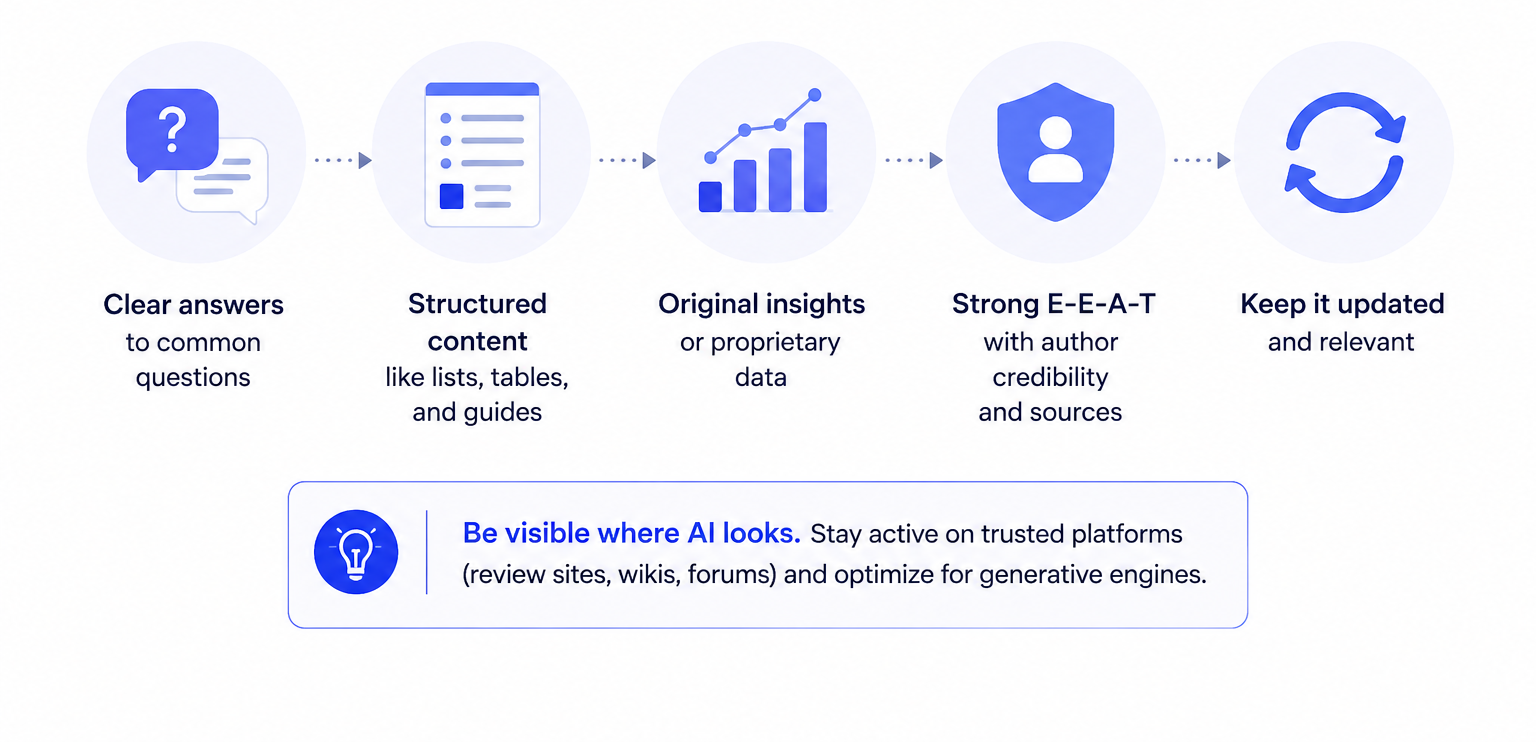
AI systems look for different signals than traditional search engines. Successful content often features:
- Direct, clear answers to common questions
- Structured formats like lists, tables, comparisons, and step-by-step guides
- Original research, proprietary data, or unique perspectives
- Strong E-E-A-T signals with clear author credentials and sources
- Regular updates and current information
Brands that publish thought leadership in accessible formats, maintain active presence on platforms AI tools reference (such as review sites, industry wikis, or forums), and optimize specifically for generative engines tend to close the gap.
Strategies to Close the AI Visibility Gap
Enterprise brands can regain ground with deliberate action.
Develop a GEO Strategy. Generative Engine Optimization goes beyond traditional SEO. It involves creating content specifically designed for AI extraction while maintaining quality for human readers. This includes using natural question-answer formats, adding statistics and comparisons, and ensuring content stands alone as authoritative.
Invest in Fresh, Authoritative Content. Reduce content bureaucracy where possible. Create dedicated teams or streamlined processes for timely publications on trending topics. Combine this with evergreen assets that get regular updates.
Leverage Structured Data and Multimedia. Use schema markup, clear headings, tables, and high-quality visuals that AI can reference. Video transcripts and detailed guides often perform well across platforms.
Build Broader Digital Footprint. Increase mentions across diverse, trustworthy sources. Encourage customer reviews, earn media coverage, and participate in industry conversations that AI tools monitor.
Track and Measure AI Visibility. Use specialized tools available in 2026 to monitor how often your brand appears in responses across different AI platforms. Test key queries regularly and adjust strategies based on what gets cited.
Coordinate Across Teams. Break down silos. Align SEO, content, PR, and product teams around shared visibility goals. Consider appointing a dedicated AI visibility lead or working with specialized agencies.
Common Mistakes Enterprise Brands Make
Many large companies continue pouring resources into traditional ranking tactics while ignoring generative optimization. Others treat AI visibility as a simple technical SEO task rather than a broader content and brand strategy issue.
Some over-rely on paid media or attempt to game systems with low-quality AI-generated content, which backfires as models improve at detecting it. Others block AI crawlers out of caution, accidentally reducing their chances of being cited.
The Path Forward for Enterprise Brands
The AI visibility gap is real but not permanent. Brands that adapt fastest will strengthen their position as generative search becomes the default for many users. This requires shifting mindset from controlling every message to becoming a valuable, citable source of truth.
Success in 2026 and beyond belongs to organizations that combine their scale and resources with agility in content creation and optimization. Enterprise brands have advantages in data, expertise, and credibility. They simply need to package and distribute that expertise in ways AI tools and the people using them can easily access and trust.
The gap is widening for those who wait. Start auditing your current AI visibility, identify key opportunity areas, and build a cross-functional plan. The authority you lose today in generative answers will be much harder to regain tomorrow.

