
Sales teams celebrate closed deals and pipeline growth, but many quietly lose a fortune through weak or nonexistent follow-up. A single missed or poorly executed follow-up sequence can easily cost $1 million or more in lost revenue over time, especially in B2B or high-ticket sales. Deals stall, prospects forget you, and competitors win simply because they stayed in touch better.
The follow-up problem persists because it feels like grunt work compared to the excitement of initial calls or demos. Yet consistent, strategic follow-up often separates average teams from top performers. In 2026, with longer buying cycles and more decision-makers involved, getting follow-up right has never been more important or more profitable.
Why Most Sales Follow-Up Falls Apart
Salespeople start strong with initial outreach. They qualify leads, run discovery calls, and deliver compelling presentations. Then momentum dies. Emails go unanswered, calls get ignored, and opportunities slip into the "maybe later" category.
Common reasons include no clear process or ownership, over-reliance on manual reminders that get forgotten, fear of seeming pushy, lack of valuable content to share between touches, and poor handoff between marketing and sales.
These issues compound. A prospect who showed strong interest in week one receives nothing by week four and assumes you do not care or have nothing new to offer. They move on to the next vendor who stays top of mind.
The Hidden $1 Million Cost
Calculate the real impact. Suppose your average deal size is $50,000 and your team generates 400 qualified opportunities per year. If weak follow-up causes you to lose just 20% of winnable deals, that equals 80 lost opportunities or $4 million in revenue. Even conservative estimates put the annual leakage at seven figures for most mid-sized sales organizations.
Beyond direct lost sales, poor follow-up damages pipeline predictability, lowers win rates, and increases customer acquisition costs. Sales reps waste time chasing cold leads instead of nurturing warm ones. Managers cannot forecast accurately when deals disappear without clear next steps.
The problem grows worse with remote and hybrid buying. Prospects research independently and engage multiple vendors. Without systematic follow-up, you lose control of the narrative and the relationship.
The Psychology Behind Poor Follow-Up
Prospects rarely say no outright. They say "not right now" or simply go silent. Salespeople interpret silence as rejection and move on. In reality, most buyers need multiple touches across weeks or months before deciding.
People buy from those they trust and remember. A single great conversation rarely builds enough trust. Multiple value-adding interactions do. Yet many reps stop after two or three attempts, far short of what most complex sales require.
Buyers also suffer from decision fatigue and inbox overload. Your message competes with hundreds of others. Without a planned sequence that provides new reasons to engage, it gets buried and forgotten.
Building a Follow-Up System That Actually Works
Treat follow-up as a core sales process, not an afterthought. Create standardized sequences tailored to different buyer stages and personas.
A strong system includes clear timelines and cadences (for example, contact every 5–7 days initially, then space out), multiple channels (email, phone, LinkedIn, video messages), valuable content at each touch (case studies, industry insights, personalized findings), and defined triggers for escalation or different messaging.
Document everything. Every opportunity should have a visible next step and owner. Use mutual action plans with prospects so follow-up feels collaborative rather than one-sided.
Content and Messaging That Moves Deals Forward
Generic "just checking in" messages get ignored. Every follow-up must offer value or address a specific concern.
Effective touches include:
- Sharing relevant industry data or trends
- Sending a short video addressing a question from the last call
- Providing a custom comparison or ROI analysis
- Highlighting a new customer success story similar to their situation
Personalization matters. Reference specific pain points discussed earlier. Show you listened and continued thinking about their challenges.
Vary the format. Mix text emails with video, audio messages, or even physical mail for high-value prospects. Different formats cut through noise and demonstrate extra effort.
Leveraging Technology Without Losing the Human Touch
In 2026, sales engagement platforms, CRMs with automation, and AI assistants make consistent follow-up easier. Sequence tools can schedule emails and tasks, while analytics show when prospects engage.
Use technology to handle repetition, not replace judgment. AI can suggest best send times or draft initial messages, but human insight still closes deals. Review automated sequences regularly to ensure they sound natural and relevant.
Integrate tools so nothing falls through the cracks. Automatic reminders, task assignments, and pipeline visibility keep the team accountable.
Training and Culture Changes Needed
Sales leaders must make follow-up a priority, not a checkbox. Train reps on persistence without annoyance. Role-play different scenarios and share wins from strong follow-up efforts.
Set clear expectations and metrics. Track not just activity but outcomes like meetings booked from follow-up or deals revived. Recognize team members who excel at nurturing opportunities.
Create a culture where dropping leads is unacceptable. Review lost deals regularly to identify follow-up gaps and adjust processes.
Measuring What Matters in Follow-Up
Look beyond simple activity metrics. Track:
- Follow-up completion rate per opportunity
- Conversion rates from nurtured leads versus non-nurtured leads
- Average time to close for well-followed deals
- Win rate improvement from specific sequences
Monitor engagement signals, such as email opens, link clicks, and reply rates, to refine messaging. The goal is a higher quality pipeline and more closed revenue, not just more calls made.
Common Pitfalls and How to Avoid Them
Over-following turns persistence into annoyance. Respect unsubscribe rates and feedback. Always provide an easy way to pause communication.
Under-following remains the bigger problem for most teams. Commit to at least 8–12 touches across 4–8 weeks for most opportunities.
Failing to segment sequences wastes effort. A cold lead needs different messaging than a warm demo participant. Tailor your approach accordingly.
Turning Follow-Up Into Your Competitive Advantage
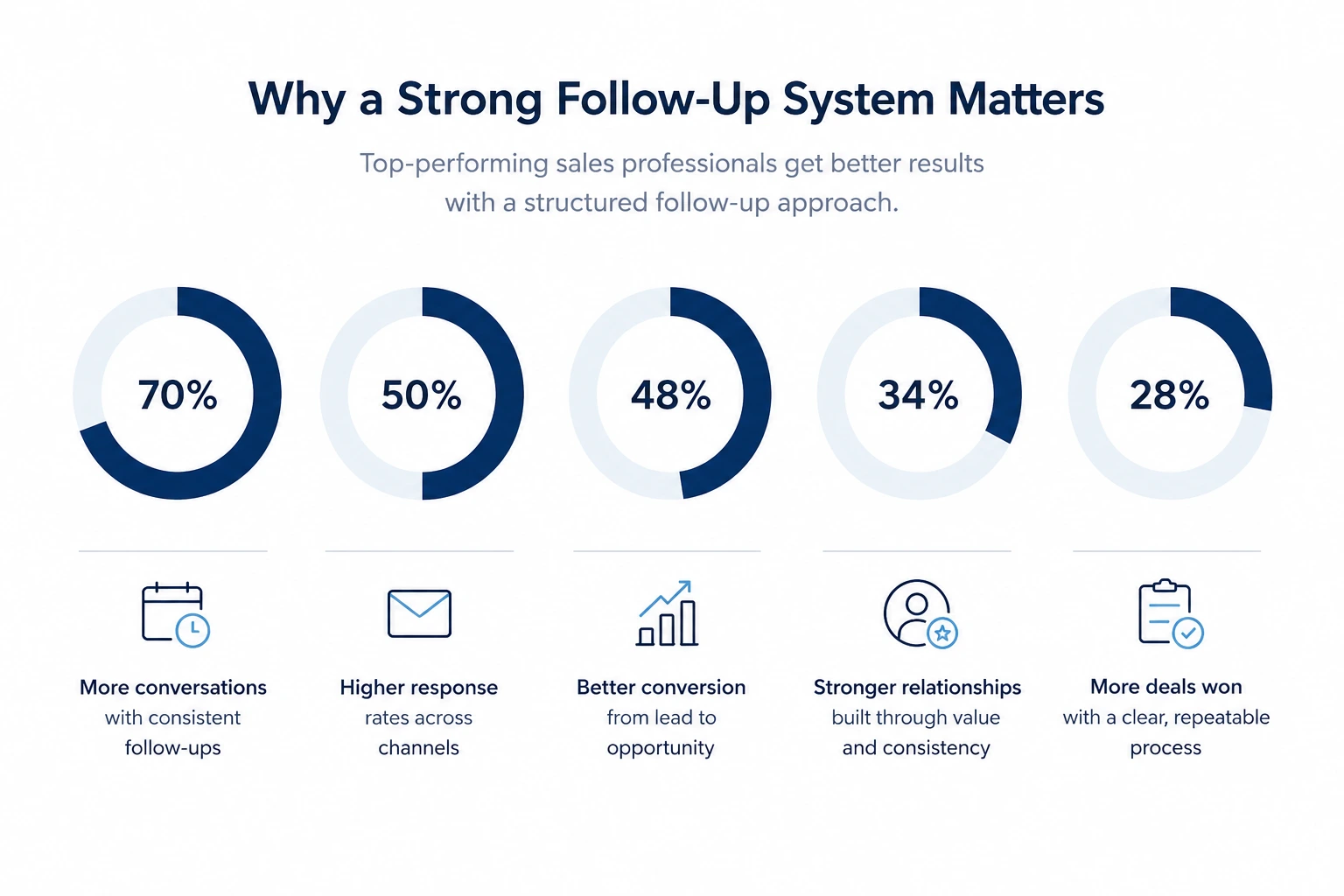
Teams that master follow-up win more deals, shorten cycles, and build stronger customer relationships. They create predictable revenue even when initial outreach volume fluctuates.
Invest time in building and refining your system now. The return comes quickly through higher close rates and recovered opportunities that would otherwise disappear.
The $1 million problem is solvable. It requires discipline, process, and the realization that great selling happens as much in the follow-up as in the first conversation. Sales teams that treat follow-up as a strategic strength rather than an annoying chore consistently outperform their peers.
Start small. Pick one sequence, document it, train the team, and measure results. Improve week after week. Over time, those consistent touches add up to significant revenue that most teams never capture.
Your next million dollars in revenue might already sit in your CRM, waiting for proper follow-up.

