
Most of your sales pipeline starts in places your analytics will never see. A buyer hears your name on a podcast, asks about you in a private Slack group, reads a Reddit thread comparing you to two competitors, then shows up on your pricing page and books a demo. Your marketing reporting logs that deal as "direct traffic" or "organic search." Every touch that mattered happened off the books.
That hidden activity is the dark funnel, and for most B2B marketing teams it is where the majority of the real customer journey happens. The term was popularized by 6sense, whose CMO Latan Conant built a whole book around the idea that buyers research anonymously and on their own terms. Ignore it and your marketing attribution rewards the last click while starving the channels that created demand in the first place.
What the Dark Funnel Is
The dark funnel is every part of the B2B buying journey that your tracking stack cannot observe. No cookie fires. No UTM parameter survives.
It includes private communities and group chats. It includes podcast listens, YouTube videos watched on a work commute, screenshots passed around in Teams, and word-of-mouth referrals over dinner. It includes anonymous visits from buyers who read four blog posts without ever identifying themselves. And increasingly it includes AI assistants, where a buyer asks ChatGPT or Perplexity to compare vendors and gets an answer your analytics platform will never register.
Gartner's research on the B2B buying process found that buyers spend only about 17% of their total purchase journey meeting with potential suppliers. The rest goes to independent research and internal debate among a buying committee of six to ten stakeholders, plus a large volume of content consumption you cannot attribute. By the time someone converts into your lead generation system, the decision is often mostly made.
Why Form Fills Undercount Your Best Channels
Form-based measurement made sense when the customer journey ran through gated PDFs. It stopped making sense years ago.
Last-touch attribution lies to you
Standard revenue attribution models credit the final trackable touch. Someone Googles your brand name after six months of dark funnel exposure, and search gets the credit. Your dashboard then tells you to cut the podcast and double the branded paid search budget. Follow that logic long enough and you defund the exact activity driving customer acquisition, then wonder why the sales pipeline dries up two quarters later.
Self-reported data gets thrown away
Ask a new customer how they heard about you and they will tell you. "A friend at my last company." "Some Reddit thread." "You came up in a ChatGPT answer." Most CRMs bury this in a free-text field nobody reads. That field is often the only honest record of the dark funnel you have.
The channels doing the work look like they do nothing
Reddit marketing is the clearest example. Reddit threads now rank on page one for thousands of "best tool for X" searches, helped along by Google's licensing deal with Reddit, reported at $60 million a year. A single well-regarded comment recommending your product can influence deals for years. It will never appear in your pipeline analytics as a source. Same story for community sponsorships, dark social shares, and organic search performance on content that educates without converting on the spot.
How to Build a Marketing Analytics Framework for the Dark Funnel
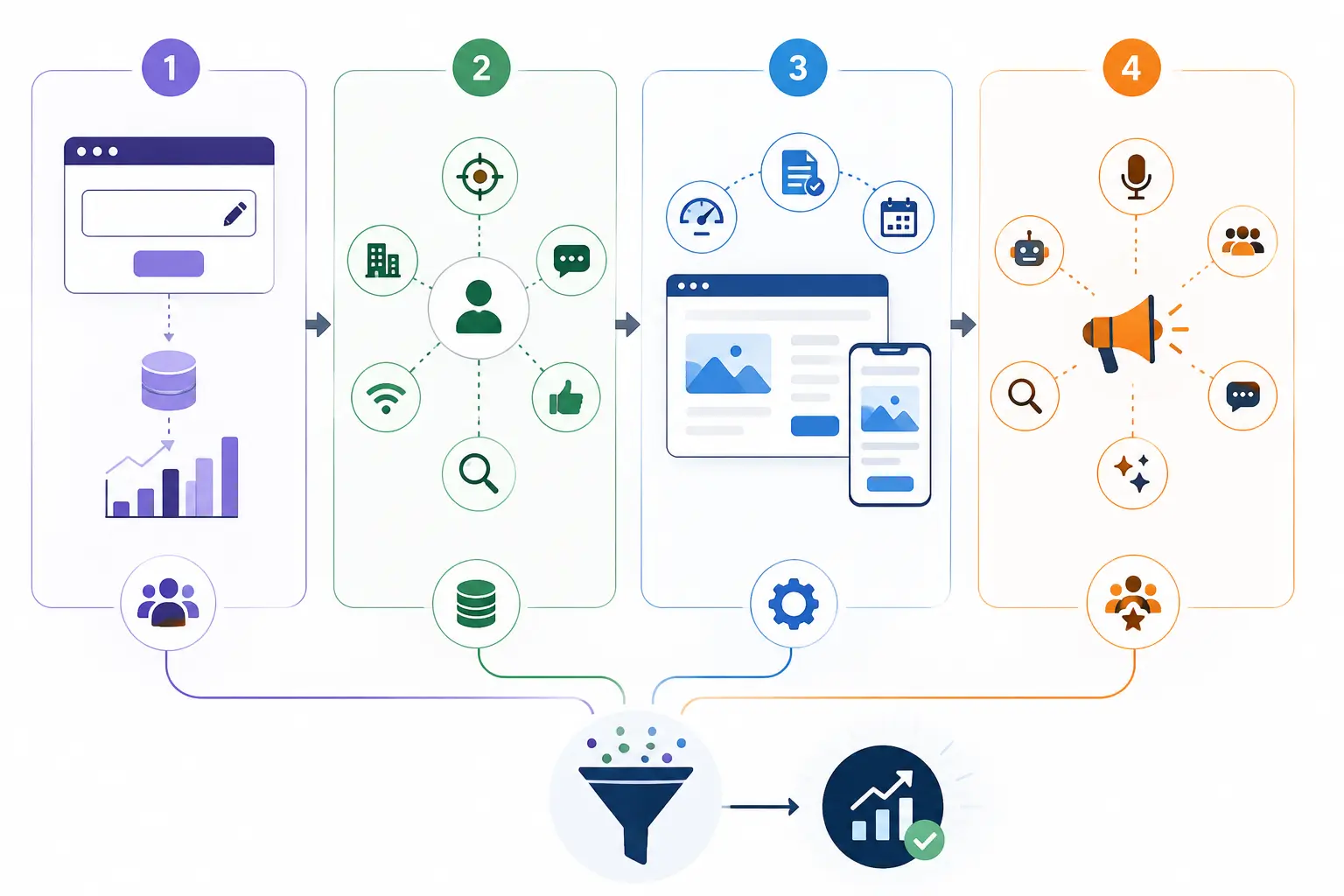
You cannot fully track the dark funnel. You can measure its edges, infer its shape, and stop punishing the channels that feed it. Dark funnel marketing is a measurement discipline, and it starts with four moves.
Add self-reported attribution and treat it as first-class data
Put an open-text "How did you hear about us?" field on every demo form. Make it required. Have revenue operations categorize the answers weekly and pipe them into your marketing reporting next to software-tracked sources. Companies that run both side by side almost always find the two datasets disagree, and the self-reported version usually points toward community, word of mouth, and content.
Blend software attribution with signal data
Marketing attribution tools still matter for what they can see. Layer sales intelligence and intent data on top: third-party intent signals showing which accounts are researching your category, IP-resolved anonymous traffic, review-site activity, and community mentions. A revenue intelligence platform can stitch these into account-level timelines that show dark funnel influence even when individual buyers stay anonymous. The goal of pipeline analytics here is directional confidence, which is all a budget decision needs.
Instrument the surfaces you do control
When a dark funnel buyer finally surfaces, your site has one shot. Landing page optimization and conversion optimization services matter more in a dark funnel world because the visitor arrives late-stage and skeptical. They have already read the Reddit thread. Customer journey optimization at this point means clear pricing and proof that matches what they heard elsewhere. Two changes with outsized effect: shorten your forms, and let buyers book meetings without a qualification gate.
Show up where the dark funnel forms opinions
Measurement is half the job. The other half is participation. Sponsor the podcasts your buyers listen to. Earn a presence in the communities where your category gets debated by answering questions with real expertise. And take AI search optimization seriously: structure your content so AI assistants cite it accurately, because a growing share of the B2B buying journey now begins with a prompt instead of a search box. Your organic search performance strategy and your AI answer strategy are becoming the same strategy.
What This Changes for Revenue Teams
The practical shift is cultural before it is technical. Marketing stops defending dashboards it knows are wrong, and sales stops asking "where did this lead come from" as if a single answer exists. Revenue operations builds a marketing analytics framework that holds tracked data and self-reported data alongside signal data in the same view and accepts that revenue attribution will always be partly inferred.
Teams that make this shift budget differently. They keep investing in brand, community, content, and events through quarters when last-touch numbers say those channels are underperforming, because the self-reported data and the closed-won interviews say otherwise. That patience is hard to sustain and it compounds. The companies dominating the threads and the AI answers today are collecting demand their competitors will never even see leaving.

